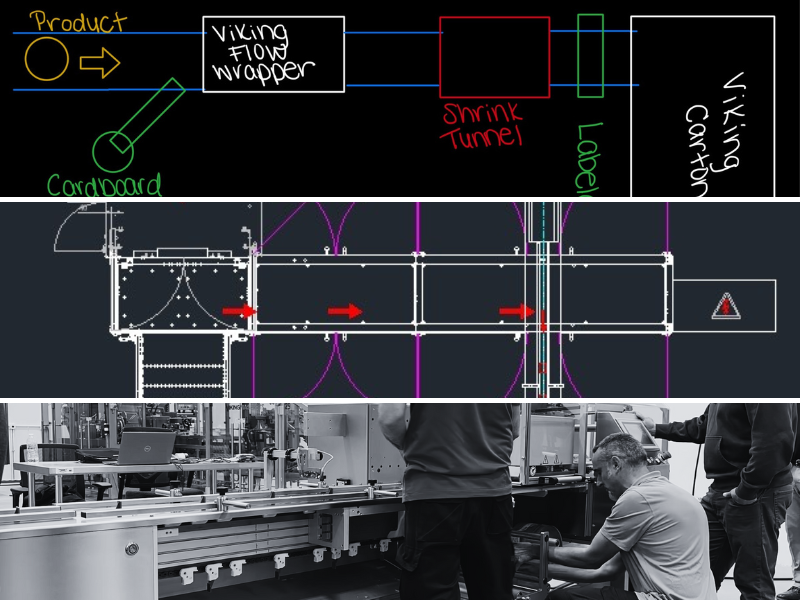
How to Scale Manufacturing Operations Without Disrupting Your Line
By Nick Knapp on January 13, 2026
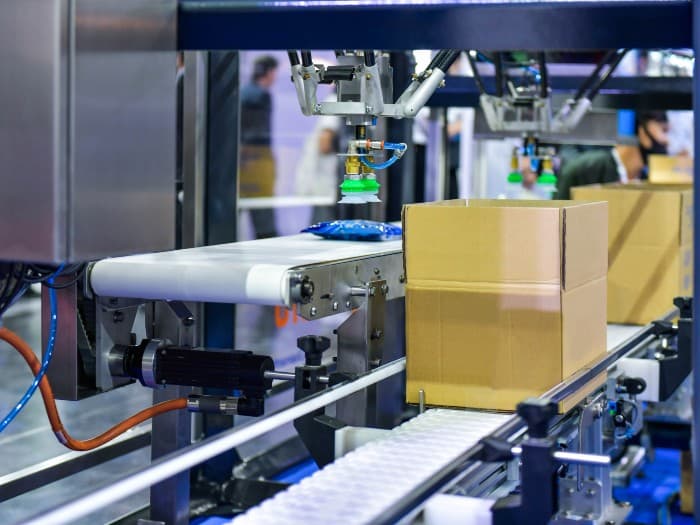
Every day, manufacturers face mounting pressure to scale quickly to secure contracts, meet evolving market demand and expectations, or capitalize on trends for competitive advantage. Yet the question remains: How do you grow your capacity without breaking what's already working?
Viking Masek has decades of experience helping manufacturers scale efficiently. We've seen firsthand what works, what doesn’t, and how customers that thrive during rapid growth are able to scale production without disrupting it.
The Hidden Cost of Reactive Scaling
There are occasions when scaling decisions need to be made quickly to increase capacity and support operations. That’s the nature of business. However, there is inherent risk in implementing scale-up too quickly:
- Operational bottlenecks due to equipment limitations or layout inefficiencies
- Downtime and production delays from mismatched machinery or poorly integrated systems
- Overwhelmed teams as they try to balance training, change, and workloads
- Short-lived investments that serve current needs but lack long-term adaptability
In some of the most avoidable shortcomings, manufacturers might choose to use hardware from multiple vendors as a reactive fix. While technically functional, there may be collective inefficiencies — incompatibility and misalignment, lack of vendor accountability, and frustrating finger-pointing and no answers when throughput falters and erodes output.
“It can be easy to find an equipment supplier that will sell you a piece of equipment — a hunk of metal, really — as long as you sign on the dotted line. Strategic scaling requires a methodical approach and a partner willing to ask questions that lead to actual solutions and smart investments for future growth.”
— Nick Knapp, Viking Masek Director of Sales
4 Keys to Strategic Scale-up
Achieving scalable growth in manufacturing isn’t accidental. It requires a framework that strategically leverages organizational insight, operational readiness, and disciplined execution:
1. Understand Your Goals
Successful scaling revolves around the awareness a manufacturer brings to the situation. Taking the time to conduct an internal assessment of both immediate production needs and broader strategic objectives provides insights that prove valuable in finding the ideal automation solution.
“Know thyself. Understand what your goals are, and what’s driving them. It doesn’t have to be a 3- or 5-, or 10-year plan. Getting a carefully considered big picture perspective helps our team get a sense of how to best help you.”
2. Align Internally Before Moving Forward
Operational alignment is imperative for scaling. Engage stakeholders across departments — from procurement and plant managers to engineering, finance, and executive leadership — early in the planning phase.
Pursuing a scale-up in isolation is very risky and not recommended.
“Let’s say a plant manager unilaterally decides to proceed with automation planning. However, corporate purchasing controls the budget and isn’t yet bought-in. What happens? Progress stalls or, worse, compromises may be made that prioritize short-term need over long-term success.”
Before scaling, come to consensus on:
- Strategic business goals
- Space and layout availability
- Long-term product mix considerations
- Expected volume surges or large contract wins
- Budget timing and procurement cycles
3. Tailor your approach
Some situations genuinely demand rapid scaling. When manufacturers win large contracts, they often need to hit non-negotiable deadlines that sometimes require moving from manual operations to full automation in a matter of months.
“At Viking Masek we anticipate hybrid needs and have solutions that can take a manufacturer from manual to semi-automated to full automation at a pace that fits the need. Having a plan for those in-between solutions is critical.”
Other times, a more measured approach to scaling can be taken. Manufacturers can build capacity and capabilities over time at a sustainable pace. This phased approach is particularly advantageous when budgets are limited, or perhaps a market opportunity is gradually evolving.
There’s no clear-cut better choice:
“A manufacturer pursuing rapid contract wins will make vastly different equipment decisions than one looking to build long-term operational resilience. Taking a checklist approach to scaling isn’t the answer. It’s less important to approach growth in phases than it is to scale up in a way that makes sense for an individual manufacturer’s business or go-to-market strategy.”
Further, turnkey automation solutions may warrant exploration. The most scalable production lines are those that are designed to accommodate additional modules, faster speeds, or new product variations without an overhaul.
Again, Viking Masek identified the pain point and solved it. “We sell turnkey solutions, but we also sell machines that are easy to integrate later. The bagger required immediately could expand into a need for additional automation — such as adding a cartoner and, eventually, palletizing capabilities. Viking Masek can help manage capital investments, ROI, and provide peace of mind. That’s our promise: Simple in motion.”
4. Choose the Right Partner, Not Just the Right Machine
Many automation challenges arise from a common misstep: selecting a transactional vendor over a strategic partner. A vendor might deliver the equipment as promised, but if the solution isn’t engineered for long-term success, manufacturers are left managing the fallout.
Conversely, experienced packaging equipment suppliers and automation experts invest in the partnership.
At Viking Masek, turnkey packaging systems are built for performance and supported by a team that views every customer engagement as a collaborative engineering opportunity.
“Our job is to usher customers through the thought process. We don’t have shelves full of plug-and-play solutions. Automation is complicated and our whole company is dedicated to helping our customers grow into their potential every step of the way.”
Scaling isn’t about adding more equipment. It’s about building systems and collaborative partnerships that grow alongside your business. If you’re planning to scale and want assistance or a second opinion, we’re here to help. Reach out to our team to start the conversation.
Related Posts

Cheese, Glorious Cheese
It's Not About Me; It's About The Team.