Packaging Psychology and Why Shoppers Choose What They Choose
By Vicki Strull on March 2, 2026
TL; DR
- Packaging decisions are emotional first, rational second
- Shelf impact captures attention but touch drives purchase decisions
- Psychological ownership increases willingness to pay more for a product
- How the package performs at home determines repeat purchase
- Small packaging changes can deliver measurable ROI
Packaging is often treated as a branding tool when, in reality, it’s a behavioral science exercise.
From the first five seconds on-shelf to the time a consumer opens the product at home, packaging design consciously and subconsciously influences purchasing decisions. The brands that understand this dynamic win market share and loyalty.
What Happens in the First 5 Seconds on the Shelf
Shoppers’ senses are activated as soon as they enter a store. Spatial awareness. Vision. Sound. Smell.
The brain goes into filtering mode. They’re scanning. Sorting. Eliminating. In those first five seconds brands are being judged via their packaging.
“There’s a lot to packaging that’s happening emotionally, not intellectually. In those first few seconds, shoppers aren’t analyzing claims. They’re reacting.”
– Vicki Strull , President of Vicki Strull Design
Here’s what’s going on. The brain:
- Looks for category cues first
- Scans for familiarity
- Identifies patterns it already recognizes
- Dismisses what feels irrelevant
To help customers cut through the stimuli overload, effective packaging must:
- Capture attention instantly
- Signal its category clearly
- Differentiate without confusing
- Align with customer buying psychology
Differentiation is a tightrope walk for brands. If your packaging doesn’t clearly signal what it is, it gets ignored or creates shopper confusion. If it looks exactly like everything else, it blends in.
Shelf impact requires balancing recognition (“I know what this is”) with intrigue (“This feels different”). When it happens simultaneously, the product earns a second look and quite possibly a first touch. Psychologically, picking up a package is the gateway to a purchase.
Why Touch Changes Everything
Seeing creates awareness. Touch creates ownership.
The moment a shopper lifts a product off the shelf, something shifts cognitively.
Touch creates a subtle sense of possession. The product is no longer optional, it’s claimed. Behavioral science explains this through two related principles:
- Psychological ownership: People experience a sense of ownership simply by handling an item
- Endowment effect: Once the feeling of ownership takes hold, people instinctively value the item more highly
Value increases not because of logic, but because of perceived possession.
This is where haptic packaging becomes strategic.
Finishes like soft-touch coatings, embossing, textured stocks, foil accents, or distinctive structural elements aren’t aesthetic extras. They’re deliberate sensory cues designed to deepen engagement. The more immersive the tactile experience, the more memorable (and premium) the product feels.
Data supports this:
- After just two physical interactions, shoppers are 50% more likely to purchase a premium-packaged product
- Edible items presented in premium packaging are perceived to taste 7% better
- Nearly 70% of consumers choose premium-packaged products when selecting a gift
All of this occurs before ingredient panels are studied or package claims are compared.
Before rational analysis begins, emotion has already influenced the outcome.
The Second Moment of Truth: Package Performance
The sale isn’t the finish line for packaging. In many ways, it’s the beginning.
Once customers have the product home, they have every expectation the packaging will perform. Meeting this expectation is where many brands lose customer trust and repeat sales.
Examples are common:
- Tear strips won’t tear
- Zippers separate after one use
- Seals leak
- Closures misalign
If the product appears somehow compromised by poor performance, even the most beautiful packaging fails and brand trust erodes.
Balancing Brand Story with Structural Reality
Packaging is not merely decoration. It’s a business growth lever that must be holistically considered through the lens of business growth.
“The whole point of packaging is to grow business. The purpose is retaining customers or acquiring new ones."
Effective packaging requires alignment between:
- Packaging designers
- Packaging engineers
- Operations teams
- Marketing leaders
- Finance stakeholders
It must also have a specific business purpose, and clarify what the brand is trying to do:
- Expand market share?
- Command a premium price?
- Enter a new category?
- Increase margins?
- Shift audience demographics?
Hierarchy decisions about what appears largest on the pack must reflect the overarching business strategy. Sometimes the category descriptor matters more than the logo. Sometimes the brand dominates. It’s a purposeful give-and-take, not an aesthetic preference.
The Human Factor Returns to Packaging
As AI-generated visuals and automation increase, consumers are responding to the human element being visible in packaging creation. Imperfect craftsmanship is interpreted as both intentional and premium.
Emerging packaging design trends include:
- Hand-drawn typography
- Tactile-looking type
- Organic illustrations
- Asymmetry and imperfection
- Human-centered packaging narratives
Brands are also leaning into transparency around sourcing and supply chains. Showing real farms, real ingredients, real people. Authenticity isn’t optional, it’s expected. Brands that embrace “human-ness” are well-positioned to earn custom trust and loyalty.
Small Packaging Changes That Deliver Big ROI
Full rebrands are rarely necessary to improve performance. Focus on interacting with current packaging to better understand what works and what doesn’t, and implement small changes that could lead to big ROI.
Use this checklist to gain meaningful insights:
- Audit functionality first: Open your own packaging like a consumer would. Test seals, closures, tear features, and reseal performance.
- Experience it physically: How does the package feel in-hand? Is it sturdy? Engaging? Does it justify the price point?
- Clarify your brand story: Does your packaging communicate what your brand is beyond the ingredients?
- Evaluate differentiation: Does your packaging stand out appropriately within the category?
- Consider strategic haptic upgrades: Intentional use of embossing, soft-touch coatings, and foil accents can increase perceived value.
- Align design with margin goals: Premium perception supports pricing strategy. Packaging can protect or expand margins.
Packaging decisions are emotional first, rational second. The brands that understand and leverage this key factor don’t just win on the shelf. They win customer trust, loyalty, and repeat business.
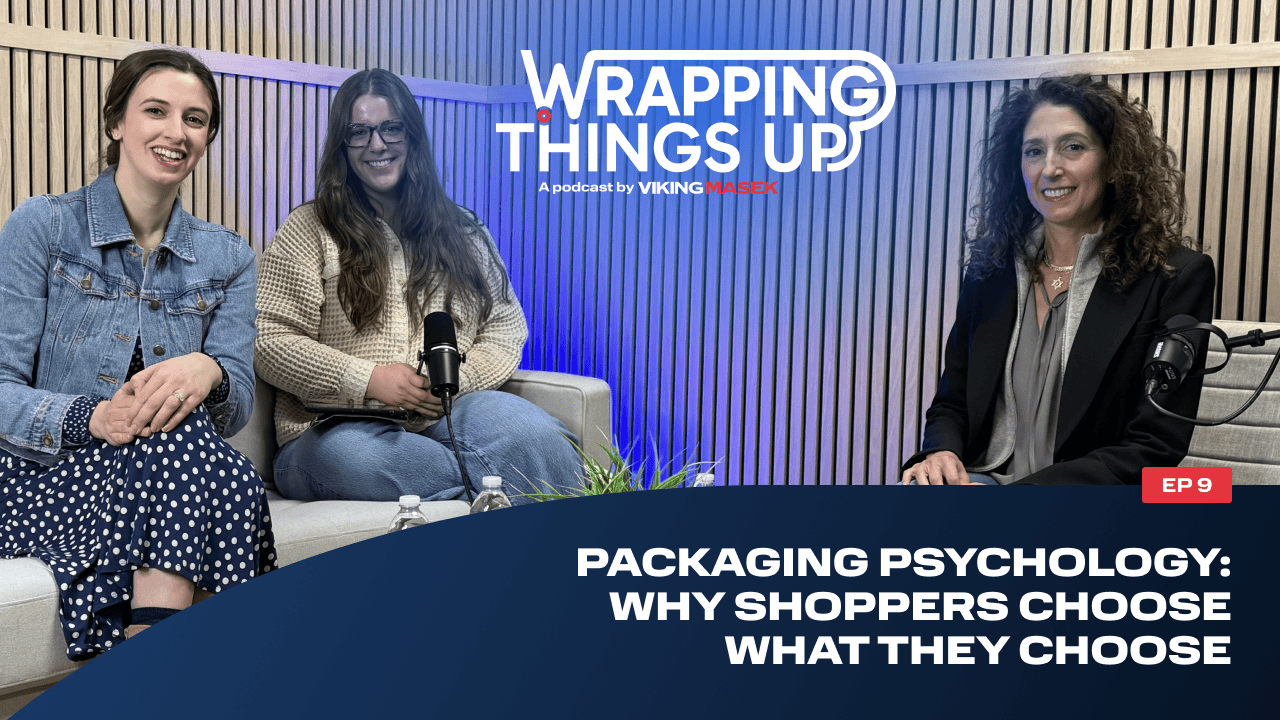
Hear more about the intersection of packaging psychology, design, and performance from Vicki Strull on the Wrapping Things Up podcast, and browse past episodes for more thoughtful conversations on packaging’s real-world impact.
Frequently Asked Questions
How do shoppers actually evaluate packaging in a store?
Most shoppers don’t “evaluate” packaging in the traditional sense. In-store, they scan fast, rely on shortcuts, and make snap judgments based on what feels familiar, credible, and easy to understand. Visual cues (category, benefit, flavor/variant, brand) are processed quickly, often before any reading happens. That’s why clarity and hierarchy matter as much as creativity.
What’s the difference between packaging that looks premium and packaging that feels premium?
“Looks premium” is visual, meaning color, typography, whitespace, photography/illustration, and composition. “Feels premium” speaks to materials, rigidity, texture, coatings, opening experience, sound (crinkle/click), and how the package behaves in-hand. In total, these cues shape perceived value and trust. In many categories, tactile quality is what turns interest into commitment, especially when prices are higher or options are crowded.
When does packaging design start affecting brand loyalty?
Earlier than most people think, and often later than most teams design for. Packaging affects loyalty at the use moment: opening, dispensing, resealing, storing, and disposal. If the package is frustrating (tears wrong, won’t reseal, leaks, clogs, breaks, is hard to pour), consumers may not repurchase even if the product itself is great. Great packaging isn’t just “sell,” it’s “repeat.” In an era of convenience and on-the-go snacking, function is a product in its own right.
How should brands balance differentiation with category expectations?
Differentiation works best when it’s built on a foundation of category clarity. Shoppers need to immediately understand what the product is, what problem it solves, and how it fits into their routine. If a package breaks too many category signals (format, color cues, naming conventions, structure), it can confuse rather than convert. The sweet spot is distinct but recognizable: enough familiarity to be understood, enough difference to be chosen.
What should brand teams test before approving a packaging change?
Beyond “does it look good,” teams should test:
- Shop-ability: Can someone identify the product and primary benefit in seconds?
- Use-ability: Can it be opened, resealed, poured/dispensed, and stored reliably?
- Durability: Will it survive shipping, handling, and real household use?
- Communication: Is hierarchy clear (brand, product type, variant, key claim)?
- Operations fit: Does it run consistently, minimize defects, and protect product integrity?
Testing these early reduces expensive late-stage fixes and protects the consumer experience.
Related Posts
How to Choose the Best IP Rating for Your Production Environment

How to Choose the Right Packaging Automation Partner